
Lilac Season: Making the Most of Three Fleeting Weeks in Spring
If you have ever stood beneath a lilac bush in full bloom, you already know the particular grief of it. The fragrance arrives without warning, fills an entire yard, and then disappears before you have quite gotten used to it. Lilac season is genuinely short. Depending on where you live, you may have as few as ten days to work with, or as many as three weeks if the spring weather cooperates. After that, the blossoms brown at the edges, the scent fades, and the window closes for another full year.
That brevity is exactly what makes the spring blossom harvest so worth planning for. This guide covers when lilacs bloom across different regions, how to read your plants for peak timing, and what you can actually do with a good harvest once you have one.
When Do Lilacs Bloom? A Regional Overview
Bloom time shifts significantly depending on your latitude, elevation, and local microclimate. Here is a general reference by region in North America:
| Region | Typical Bloom Window | Notes |
|---|---|---|
| Pacific Northwest (low elevation) | Late March to mid-April | Cool, damp springs extend bloom slightly |
| Mid-Atlantic and Southeast | Mid-April to early May | Warm spells can shorten the window sharply |
| Great Lakes and Midwest | Early May to late May | Classic lilac country; long cool springs ideal |
| New England | Mid-May to early June | Rochester, NY festival held annually around this peak |
| Mountain West (above 5,000 ft) | Late May to mid-June | Higher altitude delays bloom considerably |
| Canadian Prairies | Late May to June | Short season but intense fragrance in dry air |
In Europe, lilac season in France and Eastern Europe (where a significant portion of the world's lilac absolute is sourced) typically runs from late April through mid-May. Bulgarian and Ukrainian cultivars are particularly prized in the fragrance industry for their dense, complex scent profile.
The single most reliable indicator is not the calendar. It is the temperature. Lilacs need a certain number of cold hours during winter dormancy, followed by a gradual warming. When nighttime temperatures consistently stay above 40°F (4°C) and days push toward 60°F (15°C), bloom is usually one to three weeks away. A sudden heat spike will rush the whole process and compress your window. A cool, overcast spring is a gift.
Reading Your Plant: Peak Versus Past Peak
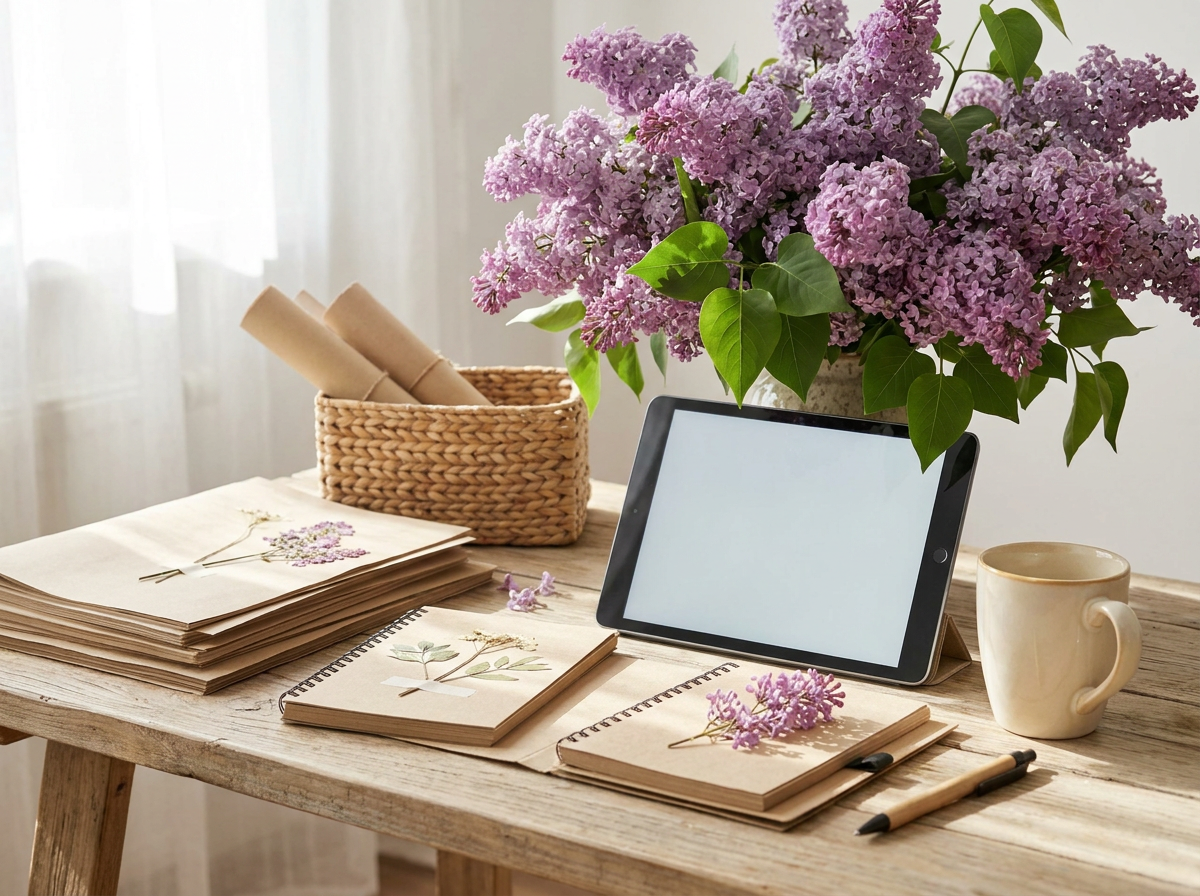
Not every open cluster is at its aromatic best. Lilacs go through a progression that is worth understanding before you harvest.
Stage One: Bud Swell
The clusters are tight and the individual florets are still closed. Fragrance is minimal at this point. This stage usually lasts five to eight days.
Stage Two: First Opening (Harvest Sweet Spot)
About a third to half of the florets on each cluster have opened. The fragrance is at its strongest and most complex. This is the moment most experienced harvesters aim for. In cool weather, this stage can last four to six days. In a heat wave, you may have two.
Stage Three: Full Bloom
The cluster is fully open and visually stunning. Fragrance is still present but beginning to simplify. This is the best stage for cut flower arrangements and for infused oils that prioritize visual appeal alongside scent.
Stage Four: Past Peak
Floret edges begin to brown. The scent takes on a slightly musty or overripe quality. Avoid harvesting at this stage for any aromatic purpose.
Harvesting for Scent: Practical Notes
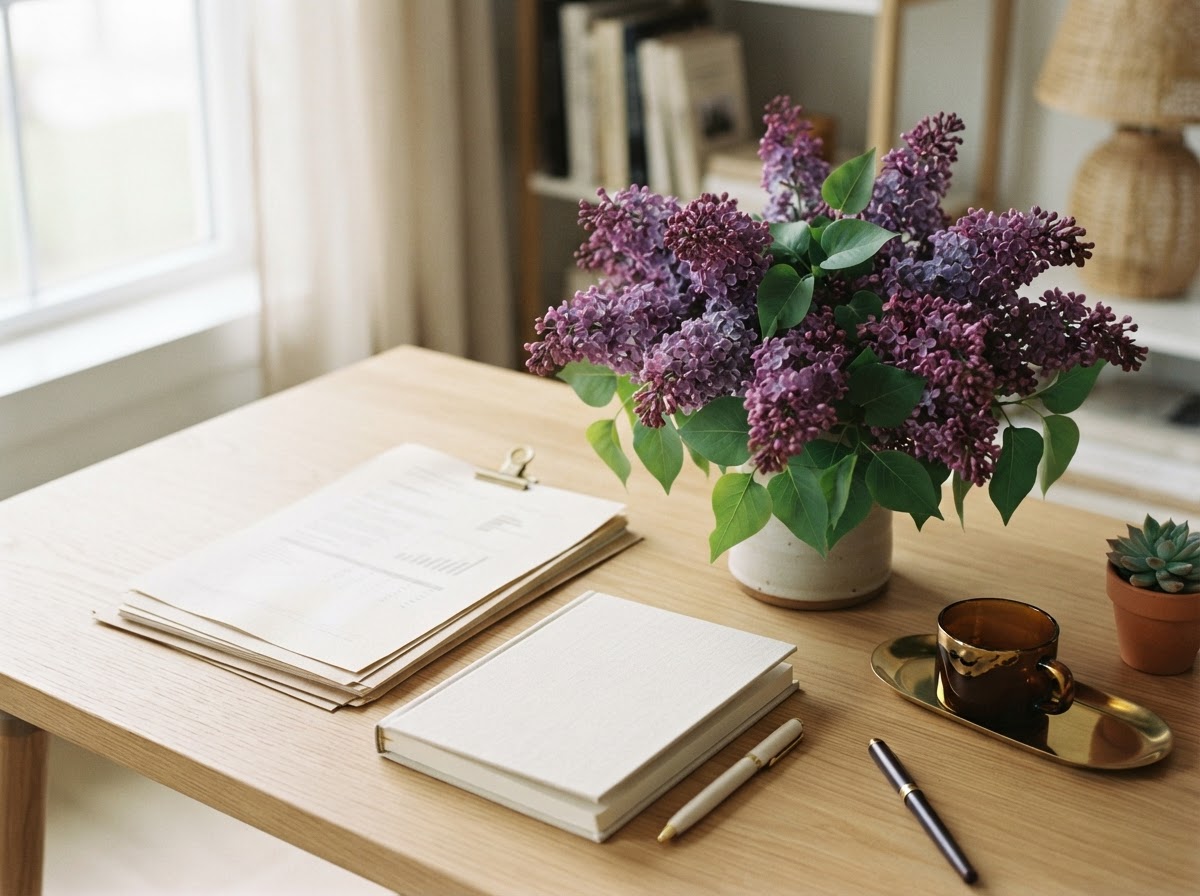
Timing within the day matters as much as timing within the season. Lilac fragrance peaks in the morning, after any dew has dried but before the midday heat begins to dissipate volatile aromatic compounds. Aim for a window between 8 a.m. and 11 a.m. on a dry day.
A few practical points before you cut:
- Use clean, sharp pruning shears. Crushing the stem reduces the vase life of cut sprays and can introduce bacteria into infusions.
- Cut stem ends at a 45-degree angle and get them into water immediately if you are not processing right away.
- Harvest from multiple cultivars if you have access to them. White lilacs (Syringa vulgaris 'Alba') carry a softer, slightly powdery facet. Dark purple varieties tend toward a richer, almost indolic depth. Blending gives you more dimension.
- Never strip a single plant bare. Taking no more than one-third of the bloom clusters keeps the shrub healthy and preserves next year's blooms, which form on this year's new wood.
- If you are harvesting from wild or semi-wild plants, confirm the site has not been sprayed with herbicide or pesticide. Roadside lilacs are often treated.
What to Do With a Good Harvest

Lilac is one of the most challenging botanicals in perfumery because it does not yield essential oil through conventional steam distillation. The delicate florets cannot withstand the heat. What the fragrance industry uses is either an absolute (extracted with solvents) or an enfleurage product (historically extracted with fats). For home crafters, enfleurage-style cold infusion and alcohol tincturing are the most accessible approaches.
Our ultimate craft guide to making and blending with lilac covers the full process in detail, including fat ratios for enfleurage, alcohol percentages for tincturing, and how to layer multiple batches to build intensity.
For those who want to use a quality lilac absolute or fragrance oil rather than starting from scratch, the harvest season is still relevant. Fresh lilac blossoms can be used to scent a carrier oil lightly, which then becomes the base for a room spray or linen mist. The result is subtle but unmistakably real.
Quick Seasonal Projects Worth Planning
- Fresh-blossom room mist. Steep a cup of fresh lilac clusters in two cups of distilled water for 24 hours in the refrigerator. Strain, add a small amount of 190-proof ethanol to extend shelf life, and use within two weeks. The scent is fleeting but genuinely lovely.
- Infused jojoba for body work. Pack a clean jar with fresh lilac clusters, cover completely with jojoba oil, and leave in a warm spot out of direct sun for 48 hours. Strain, repack with fresh clusters, and repeat two or three times. This is a slow enfleurage variant that yields a lightly scented carrier with real character.
- Dried blossom sachets. Spread freshly harvested clusters on a clean mesh drying rack in a warm, dry, well-ventilated space out of direct sunlight. Once fully dry (usually five to seven days), the scent will be much reduced but still present. Layer into sachets with other dried botanicals to extend the effect.
- Seasonal blending with lilac absolute. If you work with a quality lilac absolute year-round, the fresh-blossom season is a good time to smell the real thing repeatedly and refine your blending instincts. Sit with a fresh sprig while you work. It recalibrates your nose in a way that no reference chart can.
Diffuser Blends Timed to Lilac Season
One of the simplest ways to honor the season without requiring a harvest is to build a diffuser practice around it. A well-constructed lilac-forward blend can capture the atmosphere of a blooming garden in a way that extends well beyond the three-week window.
For eight seasonal diffuser recipes that pair lilac with complementary spring and early summer notes, see our collection of lilac diffuser blends for a fresh spring home. The recipes range from bright and green (lilac with violet leaf and cucumber) to warm and rosy (lilac with geranium and a touch of sandalwood).
If you are interested in a single signature blend rather than a rotating collection, the dooryard lilac blend is a good place to start. It was developed specifically to evoke the experience of walking past a mature lilac hedge at peak bloom, which is one of those scent memories that tends to be surprisingly durable.
Seasonal Variations Worth Knowing
Not every spring gives you the same lilac season. Here is how common weather patterns affect your planning:
A Late Frost After Bud Swell
This is the nightmare scenario. If temperatures drop below 28°F (-2°C) after the buds have swollen but before they open, you can lose most of your blooms in a single night. If you have potted lilac cultivars or small specimens you can move, bring them under cover when late frost is forecast. For established shrubs, a frost cloth overnight can save the clusters closest to harvest.
A Warm, Dry April
Bloom arrives early and moves quickly. In a warm year, what would normally be a two-to-three-week season may compress to ten days. Check your plants every morning once you see any bud swell. You can lose the peak in a long weekend if you are not paying attention.
A Cool, Overcast May
This is the best case. Cool, cloudy conditions slow the progression through bloom stages and can extend your harvest window significantly. Fragrance development is also generally stronger in cool years.
Rain During Peak Bloom
Light rain is fine and can actually intensify fragrance temporarily. Heavy, sustained rain knocks the florets off the clusters and can cause browning. Harvest just before a heavy rain event if you have good timing information.
Keeping the Season Going
If you grow lilacs or have access to different cultivars, sequencing them is one way to extend your effective season. Early-blooming species like Syringa oblata (early lilac) can bloom two to three weeks before common lilacs. Late-blooming species like Syringa reticulata (Japanese tree lilac) follow several weeks after. A well-chosen planting of three or four sequential species can stretch your personal lilac season from early April into late June depending on your climate zone.
For those working primarily with lilac absolute or fragrance oils, the season itself becomes less a constraint and more a reference point. Coming back to fresh blossoms each spring, even briefly, sharpens your understanding of what you are working with the other eleven months of the year. The real thing is always the best teacher.
Mark the bloom date in your records each year. Over time, you will build a personal phenology of your local lilac season, and that data is genuinely useful for planning harvests, ordering supplies in advance, and simply making sure you do not miss the best days. Three weeks passes quickly. One note in a journal can make next year's season feel much more intentional.