Lilac blossom oil is one of the most misrepresented florals in the fragrance trade, since true steam-distilled lilac essential oil does not exist at any price. This guide covers what a composed lilac oil actually is, who buys it by the pound, and how to source a batch you can document.
Order a small bottle first and run it through your own formulation before committing to a drum.
Syringa vulgaris, the common lilac, belongs to a small group of blossoms that steam distillation simply cannot capture: the flower's aromatic compounds break down under heat before they ever reach a still, which is why no true lilac essential oil has ever existed commercially. What the trade actually sells under the lilac name is either a synthetic fragrance oil with no botanical content, or a composed oil built from botanical extracts and infused aromatics engineered to recreate the living bloom. Our oil belongs to the second category, and we label it as a composition rather than pretending otherwise, a distinction covered in full in our guide to what lilac oil actually is.
That composition work is not guesswork. Building a convincing lilac accord means layering the individual aroma molecules that read as lilac to the nose, from the soft florals to the green stem notes and the whisper of almond sweetness, a process detailed in how crafted lilac oil is built and broken down further in our look inside the lilac accord. For a bulk buyer, the practical upshot is that batch consistency depends on formulation discipline, not on agricultural variance the way it would for a distilled oil.
Quality control follows the same logic as any composed fragrance: consistency comes from the formulator's process, not from a botanical harvest. Buyers evaluating a supplier should read a spec sheet the way our quality guide recommends, checking what is disclosed about the extraction and blending method rather than looking for a certificate of botanical origin that cannot exist for this flower.
| Sold as | What it actually is | How to recognize it |
|---|---|---|
| Pure Lilac Essential Oil | In practice, either a mislabeled fragrance oil or a heavily diluted synthetic, since steam distillation destroys the blossom's scent before it reaches a still | Listings that promise pure or steam-distilled lilac with no mention of a composition or accord, a pattern covered in spotting fake lilac essential oil listings |
| Lilac Absolute | Technically achievable through solvent extraction, but the yield is so low and the cost so high that genuine commercial lots are rare to the point of irrelevance for a wholesale program | Prices far outside any candle, soap, or fragrance budget, with no sizing published beyond small perfumery vials |
| Lilac Fragrance Oil | A synthetic aromatic compound engineered to smell like lilac, typically with no botanical extract in the formula at all | Safety data built entirely around synthetic aroma chemicals, discussed in lilac fragrance oil vs crafted lilac blossom oil |
| Composed Lilac Blossom Oil | A blend of botanical extracts and infused aromatics built to recreate Syringa vulgaris in bloom, sold under an honest, composition-forward label | A spec sheet that names the extraction and blending method plainly rather than implying distillation |
None of these three categories disqualifies a wholesale buyer on its own; the failure mode is a supplier who blurs the line between them on the label.
The sourcing trap is simple: any bulk quote for pure or steam-distilled lilac essential oil is either a fragrance oil in disguise or priced like an absolute that does not exist in the volumes a production line needs. Buyers who ask suppliers to name the extraction method plainly, as covered in reading a lilac oil label before you order, avoid the problem before the first drum ships.
The wholesale buyers for a composed lilac oil cluster around a handful of production categories rather than the general aromatherapy trade: candle and wax melt manufacturers chasing a nostalgic spring scent, soap makers building seasonal bar lines, room and linen spray brands, indie perfumers formulating florals, diffuser blend companies, body-care formulators, and seasonal gift lines. Each of these groups appears throughout our roundup of ways this oil gets used, and each is addressed on its own page below.
What they share is a need for consistency across a production run and documentation they can hand to their own customers, not a need for the marketing language of pure or wildcrafted. A buyer scaling from a home studio to a production line will recognize the shift described in choosing a first bottle, just at pound and drum scale instead of ounce scale.
Before committing to a drum-scale order, a wholesale buyer should confirm the following with any lilac oil supplier.
Treat the Certificate of Analysis as the floor, not the ceiling: a supplier willing to discuss composition and consistency in detail is telling a bulk buyer more than any single document can.
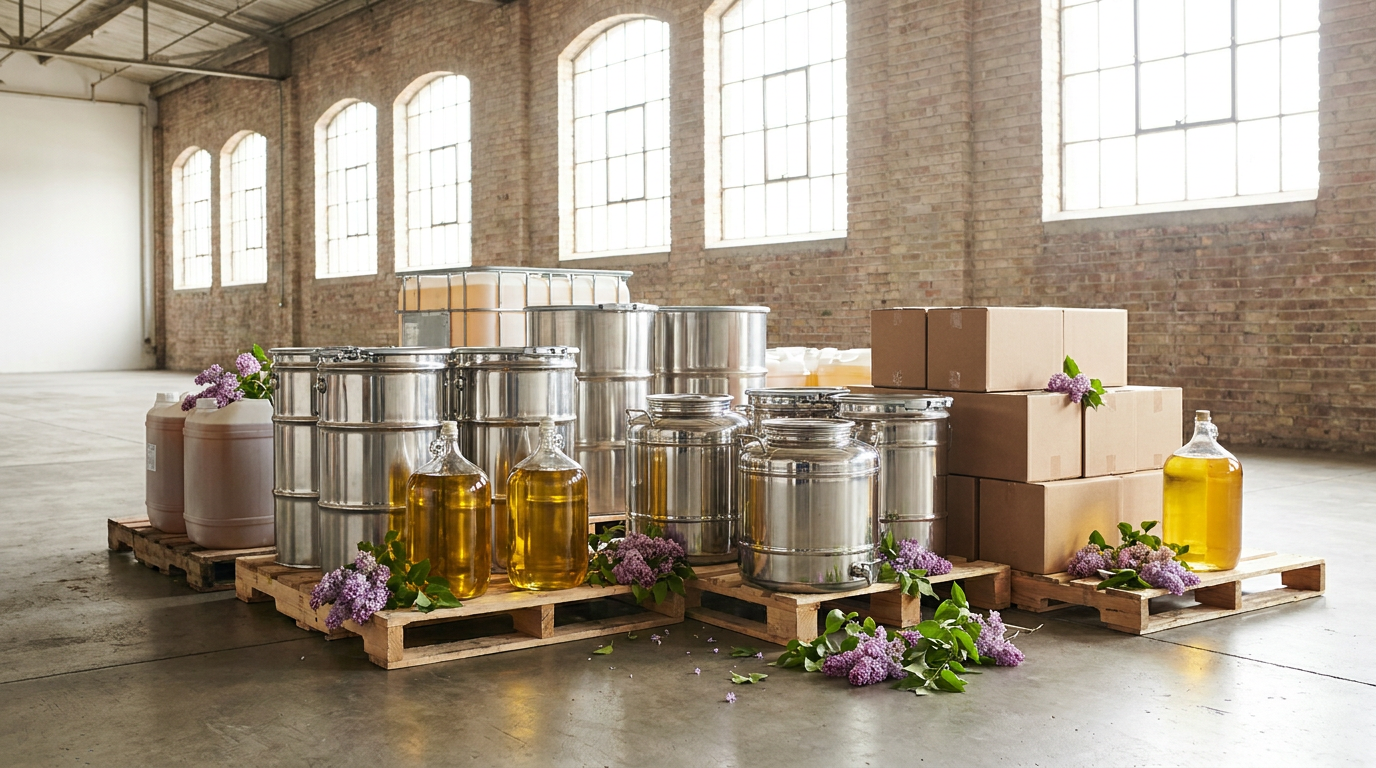
Lilac blossom oil is sold from a half-ounce sampler up through a four-hundred-pound drum, and the right size depends on where a buyer sits between pilot batch and full production run.
Most wholesale buyers land on the 5 lbs or 25 lbs tier for an established product line, moving to 400 lbs only once a formula and its sales volume are proven; pricing across the ladder is published on the bulk order page.
Order a small bottle, typically 1 oz or 2 oz, and run it through your actual formulation rather than judging it from a scent strip.
Once the formulation is confirmed, request pricing at the pound or drum size that matches your production run through the bulk page or a direct message via contact.
Place the production order against the Certificate of Analysis for that specific lot, not a generic spec sheet, so any later batch can be checked against the same baseline.
Reorder against the same lot documentation and flag any perceptible shift in the accord immediately, since a composed oil's consistency depends on catching drift early.
The pages below cover the wholesale buyer categories this oil genuinely serves, each with its own formulation notes, supplier checklist, and sizing guidance.
Soy and paraffin candle makers use this composed lilac oil to hit a nostalgic spring scent without the flat aftertaste of a purely synthetic blend.
Read the sourcing guide →Cold-process and melt-and-pour soap makers reach for lilac oil to build a spring bar line without relying on a purely synthetic fragrance oil.
Read the sourcing guide →Room and linen spray brands use this composed oil to build a clean, springlike floral that holds up in a water-and-alcohol base.
Read the sourcing guide →Indie and small-batch perfumers use this composed lilac oil as a heart-note building block for spring florals that no true essential oil can supply.
Read the sourcing guide →Diffuser blend brands use lilac oil to anchor spring-themed blends sold for home and retail ultrasonic diffusers.
Read the sourcing guide →Body-care formulators dilute lilac oil into carrier oils and lotion bases for a gentle, spring floral finish.
Read the sourcing guide →Gift and home-fragrance brands build spring seasonal collections around lilac oil's short, nostalgic bloom window.
Read the sourcing guide →Bulk pricing from 5 lbs through 400 lbs is published on the bulk order page, or reach out directly with your specs.